
Axis Pro
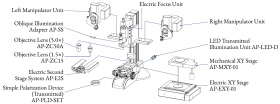
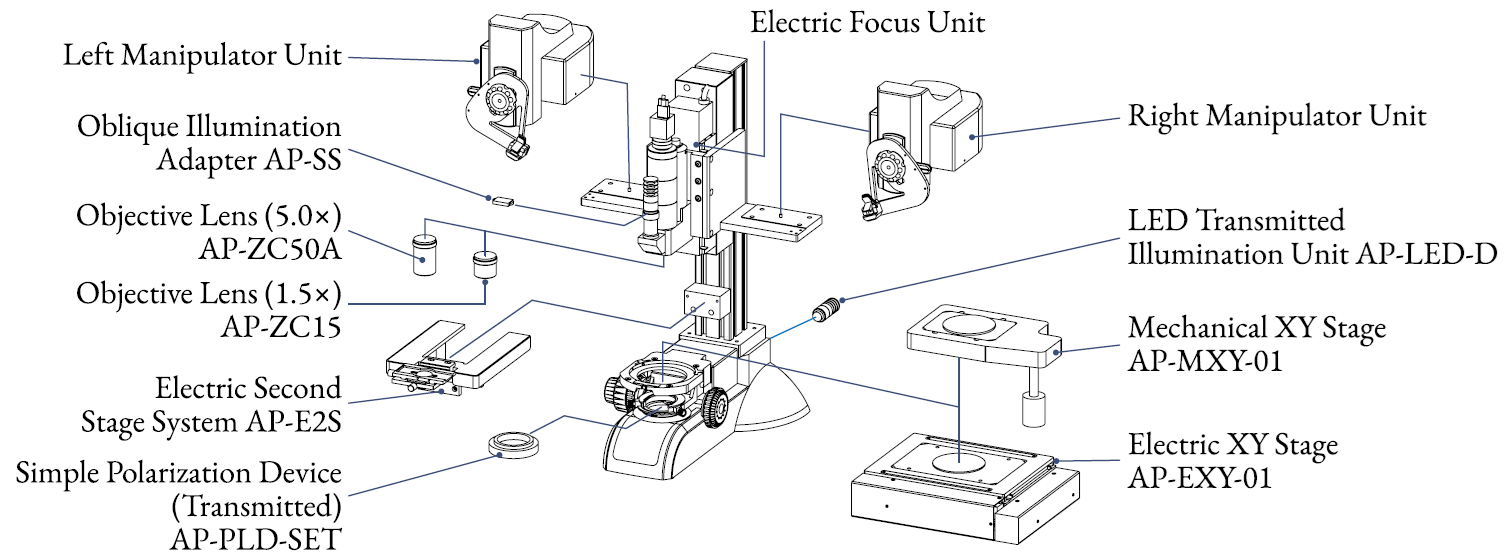
The easiest way to imagine the AxisPro is as a light microscope with two controllable arms. It consists of four main components: the camera with microscope stand, the stage, and the two arms. All of these components are controlled using the accompanying software, which, apart from a few function keys, is operated exclusively using the mouse via drag & drop.
The precision with which the arms and the tools used can be controlled lies in the sub-micrometer range (0.1 µm). The samples, which are carefully picked up, can be as small as a few micrometers.
Another strength, in addition to accuracy, is the reproducibility of the operations performed with the AxisPro. Storable positions of the arms and camera, electrically executable and storable tool operations, and in some cases even AI-assisted, automatic work ensure safety in operation and also for the samples, which is why micromanipulators are often used when dealing with expensive or rare samples, whether crystals in materials research, precious metals and gemstones in the precision mechanics of watchmaking, or components in semiconductor electronics.
The entire structure of the AxisPro can be adapted to the applications; the following table provides an overview.
If, for example, fibers or dust particles can become hazardous when processing sample bodies, the AxisPro in the APFC (“full cover”) version can be installed in a housing with doors.
If flexibility in the selection of stages is required because you are working on significantly larger workpieces or only need a controllable arm, the setup can be converted to that of the Sampling Station. For automated sorting and the collection of crystals of definable shape and color, the Collection Pro with AI-assisted control can be used.
All open versions of the AxisPro can also be operated in a glovebox and controlled from outside the glovebox.
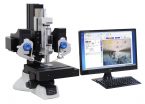
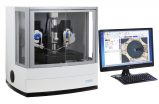
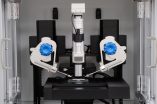



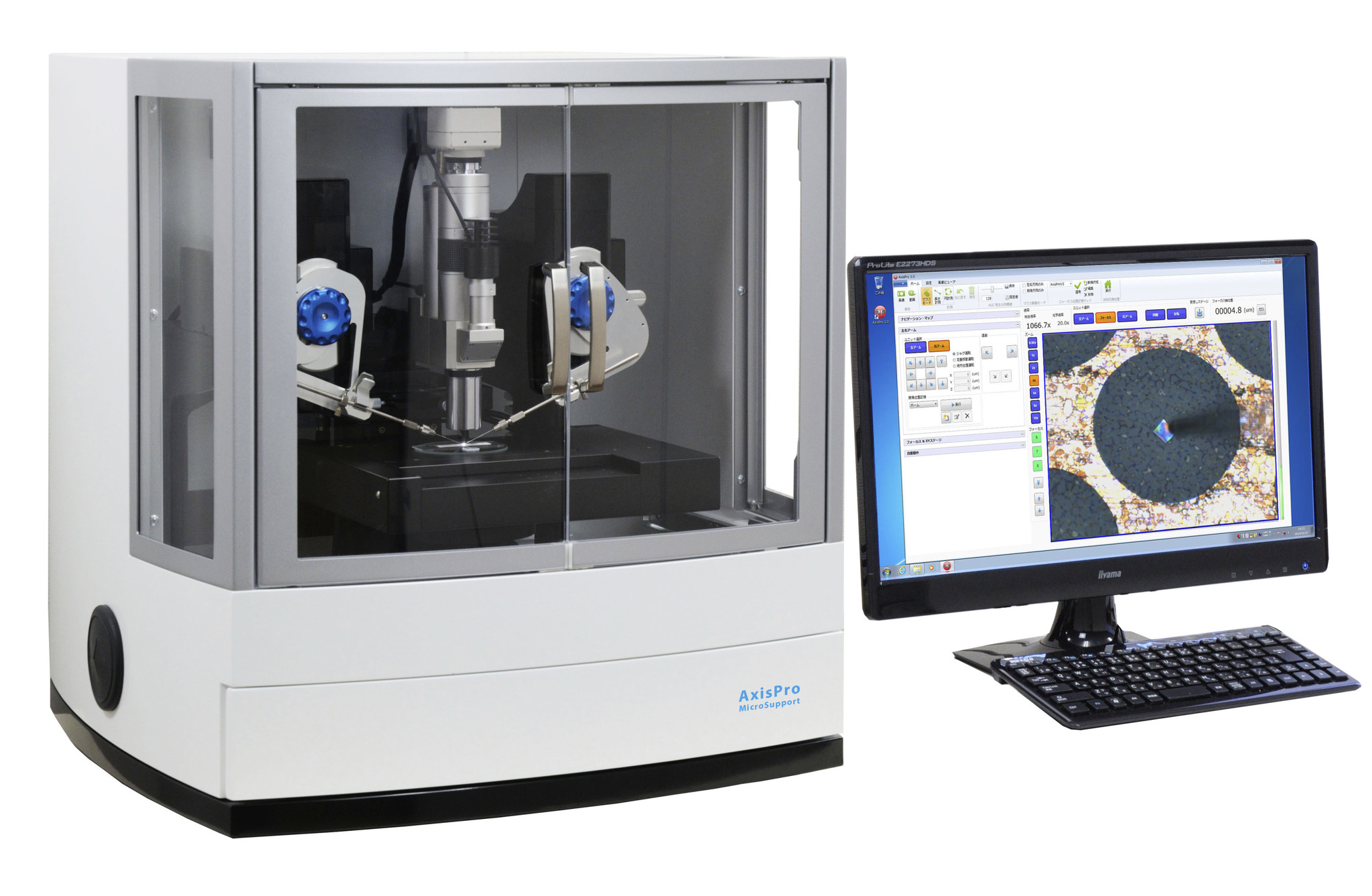
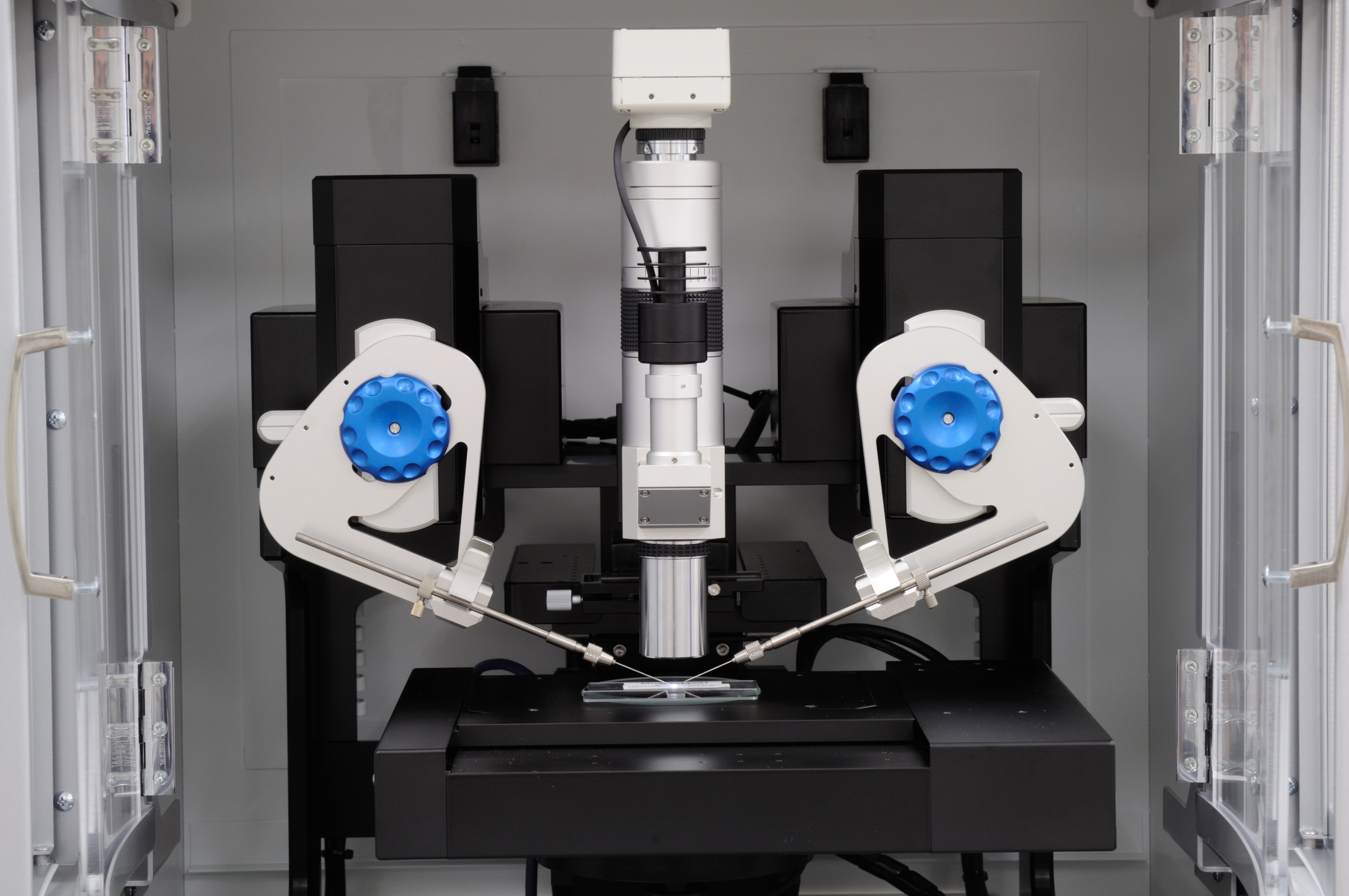
| Model | APFC | APF | APSS | Sampling Station |
|---|---|---|---|---|
 | 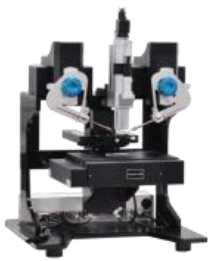 | 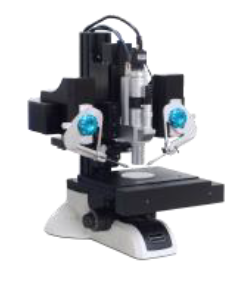 | 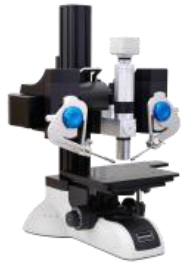 |
|
| Design | fully enclosed | open | open | open |
| Focus distance | 70 mm | 70 mm | 70 mm | 40 mm |
| Stage-Art | electrical | electrical | electrical | manual, electric as an option |
| Travel distance of the arms | X: 20 mm; Y: 20 mm; Z: 30 mm (per arm) | X: 20 mm; Y: 20 mm; Z: 30 mm (per arm) | X: 20 mm; Y: 20 mm; Z: 30 mm (per arm) | X: 20 mm; Y: 20 mm; Z: 30 mm (per arm) |
| Electrical zoom (camera) | 0,9x-10x | 0,9x-10x | 0,9x-10x | 0,9x-10x |
| Objectives | 5x, working distance 14 mm (standard) 1,5x, working distance 46 mm (optional) 3x, working distance 35 mm (optional) |
|||
| Total magnification (lens) | ≈280x-3100x (5x), ≈85x-940x (1,5x), ≈180x-2000x (3x) | |||
| CMOS camera | GigE, digital (Bild & Video via SXGA) | |||
| Sample transfer | via electrical transfer stage | via electrical transfer stage | via electrical transfer stage | manual |
| Light source | Broadband white light LED (reflective and transmissive configurations adjustable) | |||
| Operation | PC mouse (drag and drop), as well as some shortcuts | |||
| Power supply and consumption | AC100V~240V 50/60Hz single-phase, power consumption 700 W | |||
| Space requirements | 1500 mm x 700 mm (WxD) or larger | 1400 mm x 700 mm (WxD) or larger | ||
| Software | AxisPro V4 or newer (always included) | |||
| PC requirements | CPU: Intel Core i3-10110E (3.20 GHz/6MB 4C/8T) Memory: 8 GB HDD: |
|||
| Operating system | Windows 10, 64 bit | |||
| Display | 21-24 inches, depending on application | |||
All four basic components of the AxisPro can be adapted to higher requirements with additional equipment. In the case of the arms, this is achieved through extensions. The following options are available for the microscopes and the stage:
Microscope
- Oblique Illumination Adapter: enhances surface effects of samples, such as the fish-eye effect of films
- LED ring illumination: homogenizes the lighting, important for working with Collection Pro to obtain uniform images of crystalline samples
- LED Darkfield Illumination Unit: additional illumination unit that illuminates at an oblique angle, making dust, foreign particles, or scratches on smooth surfaces more visible
- Rear Converter: doubles the maximum magnification to resolve samples down to 1 µm
Stage
- Electric Rotary Stage (1-axis or 2-axis): allows electrically controlled rotation of the XY stage; the camera is re-centered so that the viewpoint does not shift during rotation.
- Long-Stroke Electric Stage: Extension of the electrical stages for larger sample bodies (exclusively for Sampling Station and APSS)
- Second Electric Stage: replaces the transfer stage and allows recorded particles to be quickly transported back and forth between a defined pickup and drop-off location.
- 2-axis tilt specimen stage: compensates for the level alignment of the stage, which is important for automated and large-area imaging with the Collection Pro.
- Tilt unit: allows sample bodies or sufficiently secured sample holders to be processed at an angle. Particularly practical when working with the MillingPro.