
uniMIR
A wavelength range from 10 to 19 µm (corresponding to 1000 to 526 cm-1) can be covered by mirSense’s uniMIR DFB-QCL (Distributed Feedback Quantum Cascade Laser). Together with the University of Montpellier, mirSense holds the exclusive license to manufacture lasers in this wavelength range. In 2021, mirSense was a finalist in the “smart sensing” category at the Prism Awards at Photonics West with its uniMIR lasers and a wavelength range of 10 to 17 µm.
What makes these lasers special is their wide wavelength range from 10 to 19 µm, which opens up new areas of research. Narrow linewidths with high sensitivity are also possible. Continuous wave (CW) mode can be achieved for wavelengths up to 17.7 µm with output powers in the milliwatt range.
In continuous wave mode, the tuning range is typically 2 cm-1 with a narrow linewidth of <100 MHz (<0.003 cm-1). However, if higher wavelengths above 18 µm are required, the laser can only be operated in pulse mode. This provides a larger tuning range and higher operating temperature.
The long-wave uniMIR lasers have a very low spectral chirp during the pulse, typically <0.04 cm-1 / 100 ns. This enables intrapulse spectroscopy without high-speed detectors or quasi-continuous wave spectroscopy (QCW) without deterioration of the spectral resolution (up to 0.01 cm-1) – using mirSense electronics for pulsed operation.
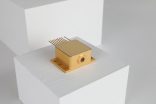
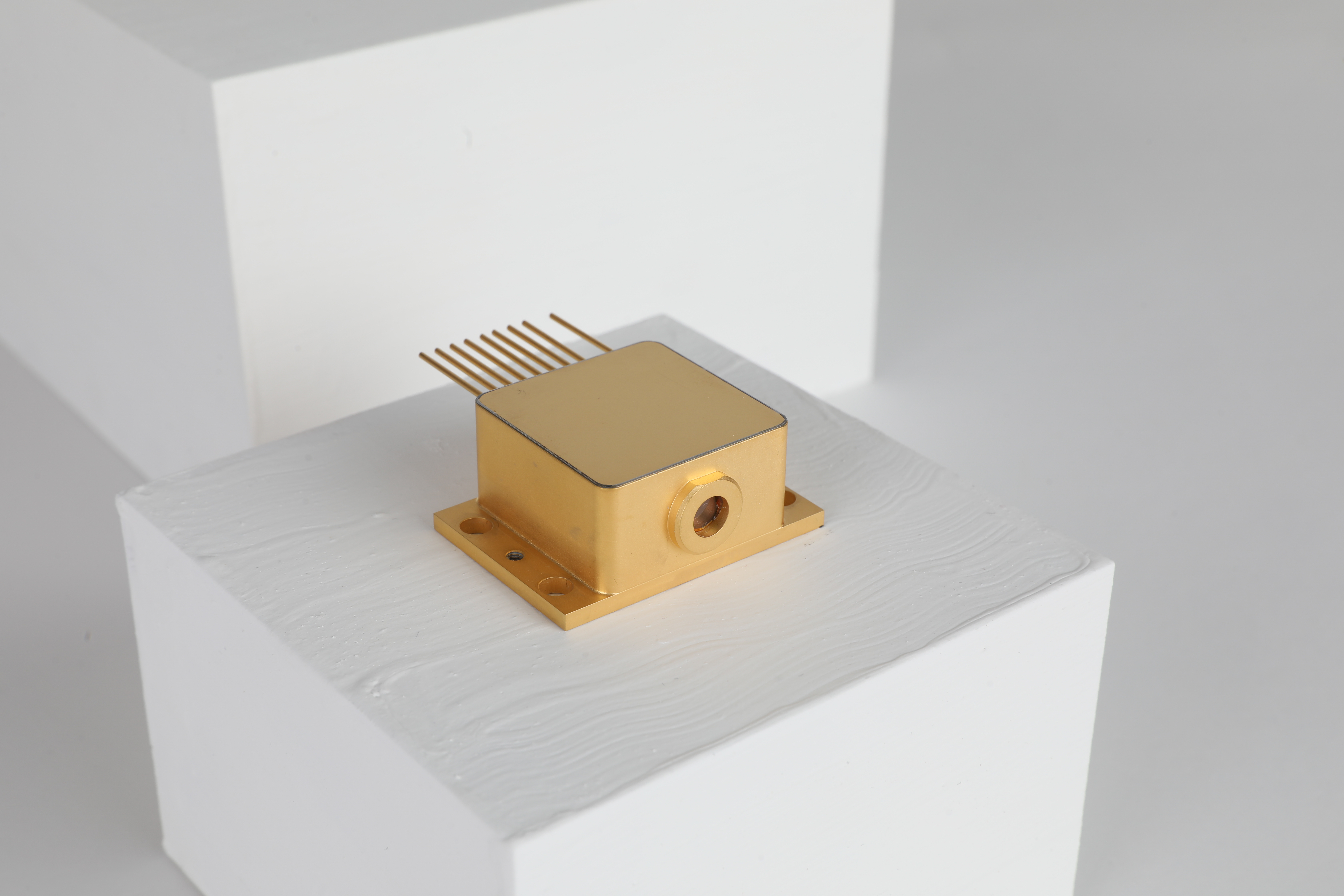
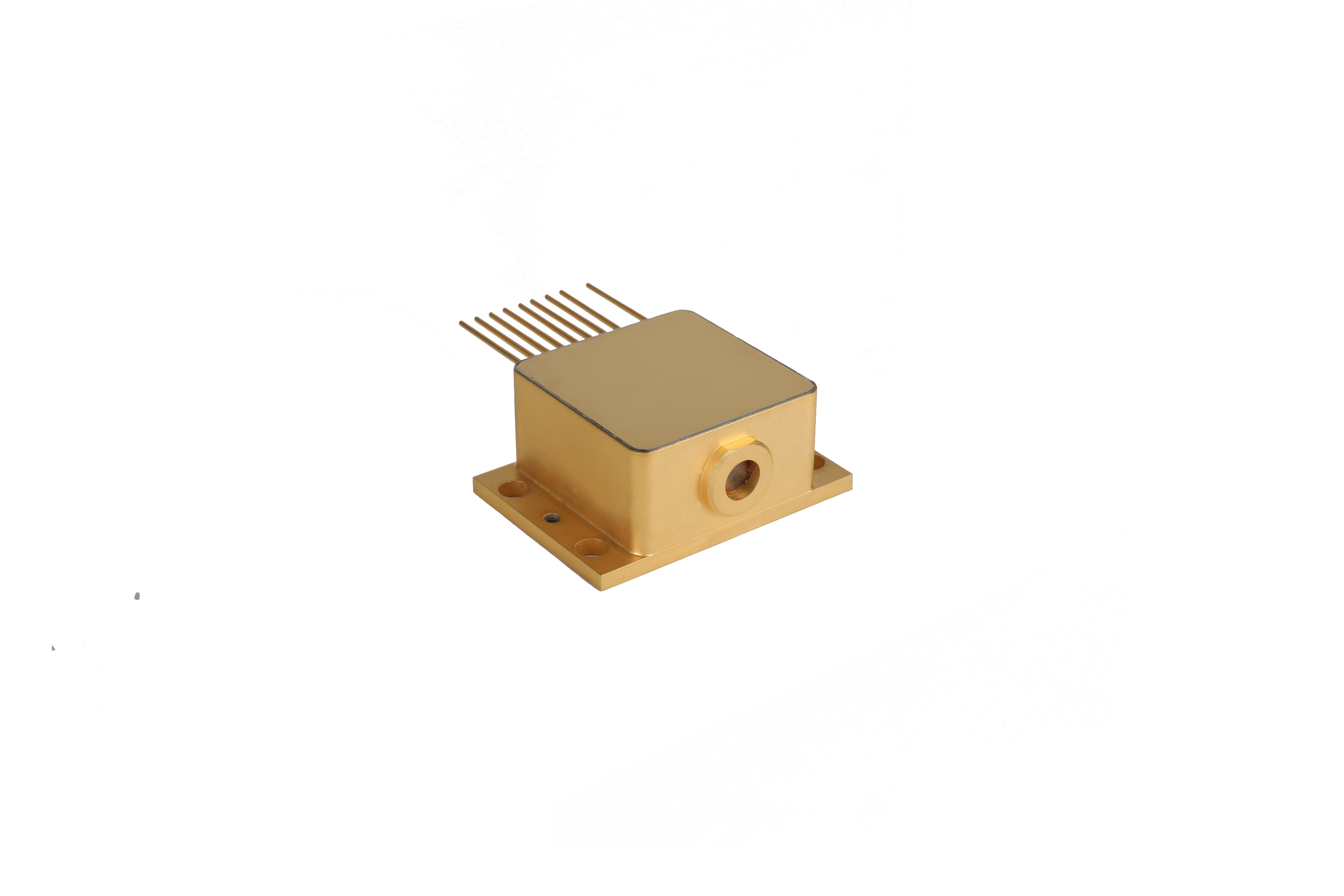
The uniMIR laser chips are mounted on a thermoelectric controller (TEC) to ensure a constant temperature of the laser chip. By changing the temperature, the emission wavelengths can be adjusted without mode jumping, while maintaining single-mode operation. The laser chip and its electronics are housed in a sealed enclosure, known as HHL (high heat load), with an integrated collimating lens and thermistor for reading the laser chip temperature.
If a larger tuning range is required, pulsed operation is possible. When using pulsed operation, power consumption is low, operation at higher temperatures is possible, and access to a larger tuning range and larger wavelengths is possible.



What are DFB QCLs?
Distributed feedback quantum cascade lasers have an integrated grating—known as a Bragg grating—in the laser cavity, which selects a single mode. They are therefore single longitudinal mode narrow-band lasers. Quantum cascade lasers generally emit in the mid-infrared range. What makes them special is that
- the cascade-like structure causes the electron to migrate through the structure (no electron-hole recombination),
- the electron is recycled
- and thus one electron can excite several electrons.
The QCL consists of an active/gain stage (where inversion population takes place) and an injection/relaxation stage (where electrons are recycled), which are repeated several times.
There are also Fabry-Pérot cavities (see powerMIR). External cavity QCLs (EC-QCLs) are not part of the mirSense portfolio.
Why is it interesting to use a wavelength range up to 19 µm?
A further wavelength range of more than 11 µm (lower than 909 cm-1) enables strong vibration spectra of small hydrocarbons such as ethene, acetylene, or propane, spectroscopy on the so-called BTEX molecules (benzene, toluene, ethylbenzene, and xylenes), or to detect nitrogen oxide. This low wavenumber range, which is covered exclusively by mirSense, also enables new applications in astrophysics, geosciences, quantum technology, measurement technology, and fundamental physics.
Scope of application
The following table shows some wavelengths and their applications:
| Application family | Wavelength | Measurable species | QCL product datasheet when available | |
|---|---|---|---|---|
| OH Hydroxyl radical spectroscopy | ~18.8 µm | ~531 cm-1 | Hydroxyl radical (OH) | UN0530Q003HNA |
| Fundamental science | ~ 17.7 µm | ~ 565 cm-1 | UN0565C002HNA | |
| Carbon emissions | ~ 15 µm | Carbon dioxide (CO2) | ||
| Fluoro | ~ 10.5 µm | ~ 948 cm-1 | Sulfur hexafluoride (SF6) | |
| VOC | ~ 13.7 µm | ~ 729 cm-1 | Toluene | UN0746C005HNA |
| VOC | ~ 14.4 µm | ~ 694 cm-1 | Toluene | |
| VOC | ~ 14.3 µm | ~ 697 cm-1 | Ethylbenzene | |
| VOC | ~ 13 µm | ~ 769 cm-1 | m-Xylene | UN0746C005HNA |
| VOC | ~ 12.6 µm | ~ 795 cm-1 | p-Xylene | UN0746C005HNA |
| VOC | ~ 13.5 µm | ~ 741 cm-1 | o-Xylene | UN0746C005HNA |
| Nitrogen | ~ 10.7 µm | ~ 930 cm-1 | Ammonia (NH3) | |
| Nitrogen | ~ 17.2 µm | ~ 581 cm-1 | Nitrous Oxide (N2O) | |
| Nitrogen | ~ 10.6 µm | ~ 941 cm-1 | Hydrazine (N2H4) | |
| Nuclear | ~ 11.3 µm | ~ 885 cm-1 | Methyl Iodid (CH3I) | UN0885C010HNA |
| Toxic | ~ 11.8 µm | ~ 850 cm-1 | Phosgene (COCl2) | |
| Toxic | ~ 14 µm | ~ 713 cm-1 | Hygrogen Cyanide (HCN) | UN0713C005HNA |
Specifications
| General Information | |
|---|---|
| Laser type | QCL single mode Distributed Feedback lasers (DFB) (1) |
| Mode of operation | CW or pulsed |
| Typical Optical Power | 5-10mW typical for wavelength under 15 microns 1-5mW typical for wavelength above 15 microns Up to 20mW with a Fabry-Pérot laser (1) |
| Full accessible wavelength range | ~3 cm-1 typically |
| Continuous tuning range | >1 cm-1 typically |
| Side mode suppression ratio | SMSR > 25 dB |
| Linewidth (FWHM) | < 100 Mhz (free-running with suitable electronics for CW lasers) |
| Divergence | < 10mrad |
| Beam quality | TM00 |
| Output beam diameter (window output) | Typically 4 mm |
| Polarization | Linear vertically polarized |
| Example for DFB lasers | Single Mode DFB QCL 885 cm-1 = 11µm | Single Mode DFB QCL 746 cm-1 = 13µm | Single Mode DFB QCL 713 cm-1 = 14µm |
|---|---|---|---|
| Application | Methyliodid CH3I | Xylene & Propane C8H10 C3H8 | Hydrogen Cyanide (HCN) |
| Laser type | QCL single mode DFB | QCL single mode DFB | QCL single mode DFB |
| Mode of operation | CW | CW | CW |
| Guaranteed minium optical power at 885 cm-1 | 10 mW (with the base plate of the HHL-package at +20°C) | 5 mW (with the base plate of the HHL-package at +20°C) | 6 mW (with the base plate of the HHL-package at +20°C) |
| Full accessible wavelength range | >3cm-1 | ~ 3cm-1 | ~ 3cm-1 |
| Continuous tuning range | > 1 cm-1 | > 0.5 cm-1 | > 1 cm-1 |
| Side mode suppression ratio | SMSR > 25 dB | SMSR > 25 dB | SMSR > 25 dB |
| Linewidth (FWHM) | < 100 Mhz (free-running with suitable electronics) | < 100 Mhz (free-running with suitable electronics) | < 100 Mhz (free-running with suitable electronics) |
| Divergence | < 10mrad | < 10mrad | < 10mrad |
| Beam quality | TM00 | TM00 | TM00 |
| Output beam diameter (window output) | Typically 4 mm | Typically 4 mm | Typically 4 mm |
| Polarization | Linear vertically polarized | Linear vertically polarized | Linear vertically polarized |